
Last Updated: February 25, 2026
I still remember the first time I watched my betta, Crimson, refuse to eat for three days straight. I was convinced something was terribly wrong until I realized I’d been feeding him the wrong type of pellets. That experience taught me everything about betta fish food and proper feeding techniques. After ten years of keeping bettas and testing dozens of food brands, I’ve learned that proper feeding can make the difference between a thriving fish and a sick one.
The best betta fish food isn’t just about buying the first pellet container you see at the pet store. Your betta’s diet requires careful consideration of protein content, feeding frequency, and food variety. Nutrition is one of the most important aspects of betta fish care, which is why I’ll share everything I’ve learned about feeding bettas properly, including my tested feeding schedules and favorite products.
What to feed: High-protein pellets (40%+ protein) as daily staple, supplemented with freeze-dried bloodworms, frozen brine shrimp, and occasional live food for complete nutrition.
How much: 2-4 pellets per feeding (approximately the size of betta’s eye when expanded). Total daily amount should equal 1.8 grams.
How often: Twice daily (morning and evening), 8-10 hours apart. Feed baby bettas 3-5 times daily.
Best schedule: Pellets 4 days/week, treats 2 days/week, fast 1 day/week for optimal digestive health.
Top foods: Hikari Betta Bio-Gold pellets, Omega One frozen bloodworms, and live brine shrimp provide the best nutrition.
| Food Type | Protein Content | Best For | Feeding Frequency | Price Range |
|---|---|---|---|---|
| Pellets | 35-50% | Daily staple | 2-4 pellets, 1-2x daily | $5-12 |
| Freeze-Dried | 45-60% | Treats/supplements | 2-3 pieces, 2-3x weekly | $6-10 |
| Frozen | 50-70% | Variety/nutrition | 2-3 pieces, 2-3x weekly | $4-8 |
| Live Food | 60-75% | Best nutrition | 2-3 pieces, 2-3x weekly | $8-15 |
| Flakes | 30-45% | Backup option | Small pinch, 1-2x daily | $4-8 |
Understanding what bettas eat in the wild is the foundation for proper feeding in captivity. Bettas are obligate carnivores living in Southeast Asian rice paddies and slow-moving streams, where they hunt insects, insect larvae, small crustaceans, and zooplankton. They’re surface feeders who snatch mosquito larvae, tiny flies, and other protein-rich creatures from the water’s surface.
This high-protein diet fuels their active metabolism and creates those vibrant colors we love. In home aquariums, we replicate this natural diet using high-protein pellets as the staple, supplemented with freeze-dried bloodworms, frozen brine shrimp, and occasional live food.
The Plant Root Myth: The myth that bettas can survive on plant roots is dangerous and completely false. While bettas may nibble at plants occasionally, they’re doing so to eat microorganisms on the plant surface, not the plant itself. A betta’s carnivorous diet must contain at least 40% protein to maintain optimal health.
Your betta needs specific nutrients that only meat-based foods provide. Look for foods with whole fish, fish meal, shrimp, or insect larvae as the first three ingredients. Avoid foods where corn, wheat, or soy appear at the top of the ingredient list. These fillers pass through your betta’s short digestive tract without providing nutritional value and can cause bloating and constipation.
High protein food should contain minimal fillers and maximum digestible protein from animal sources. Quality matters more than quantity when it comes to betta fish food.
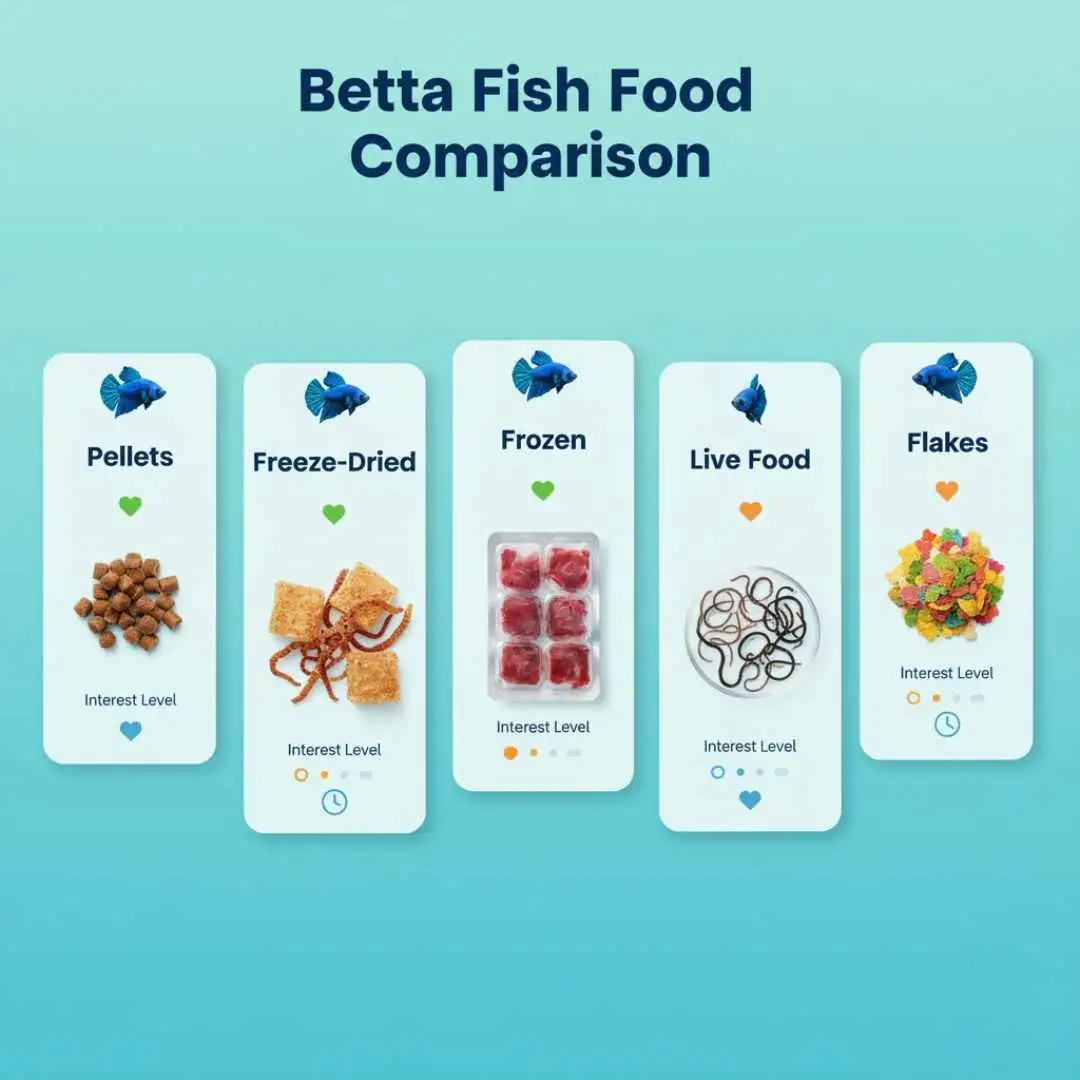
No single food provides everything your betta needs. After testing dozens of products over ten years, I’ve found that the best feeding strategy uses five food categories in rotation: pellets for daily nutrition, freeze-dried foods for convenience, frozen foods for variety, live foods for enrichment, and flakes as backup.
Each food type offers unique benefits, and rotating between them prevents nutritional deficiencies while keeping your betta mentally stimulated during feeding time.
| Feature | Pellets | Frozen | Live | Freeze-Dried | Flakes |
|---|---|---|---|---|---|
| Convenience | ★★★★★ | ★★★☆☆ | ★★☆☆☆ | ★★★★☆ | ★★★★★ |
| Nutrition | ★★★★☆ | ★★★★★ | ★★★★★ | ★★★☆☆ | ★★★☆☆ |
| Cost | ★★★★☆ | ★★★☆☆ | ★★☆☆☆ | ★★★☆☆ | ★★★★☆ |
| Mess Level | ★★★★★ | ★★★☆☆ | ★★☆☆☆ | ★★★★☆ | ★★☆☆☆ |
| Shelf Life | ★★★★★ | ★★★☆☆ | ★☆☆☆☆ | ★★★★☆ | ★★★★☆ |
Betta fish pellets form the foundation of a healthy diet. Quality pellets provide complete nutrition in a convenient, mess-free format. I feed pellets 4-5 days per week as the primary meal.
The challenge with pellets is that many expand significantly when wet. I learned this the hard way when one of my bettas developed severe bloating. Now I always soak pellets in tank water for 2-3 minutes before feeding to prevent expansion inside the fish’s stomach.
Betta fish flakes work as a backup option, though I prefer pellets for daily feeding. Flakes create more mess and waste than pellets because they break apart easily and sink quickly. Many bettas ignore flakes that sink to the bottom since they’re surface feeders.
If you choose flakes, make sure they’re specifically formulated for bettas with high protein content. Generic tropical fish flakes don’t meet a betta’s carnivorous needs.
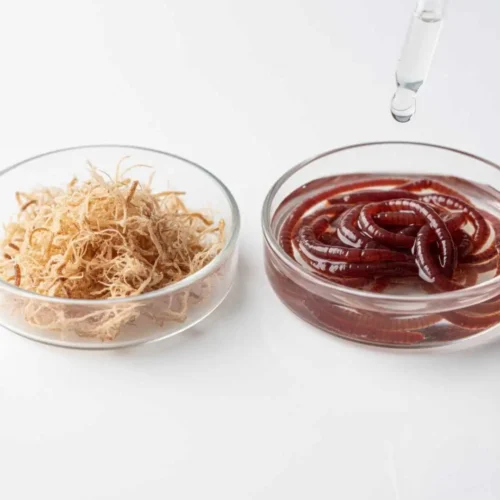
Freeze-dried bloodworms and other freeze-dried foods make excellent treats. These foods retain most of their nutrients while being shelf-stable and parasite-free. However, they lack moisture and can cause digestive issues if overfed.
Critical Rule: Always rehydrate freeze-dried foods in tank water for 10-15 minutes before feeding. This prevents the food from expanding inside the betta’s digestive system. Use clean tank water for rehydration. If you’re unsure about your water quality, check our guide on what kind of water for betta fish to ensure you’re using the safest source.
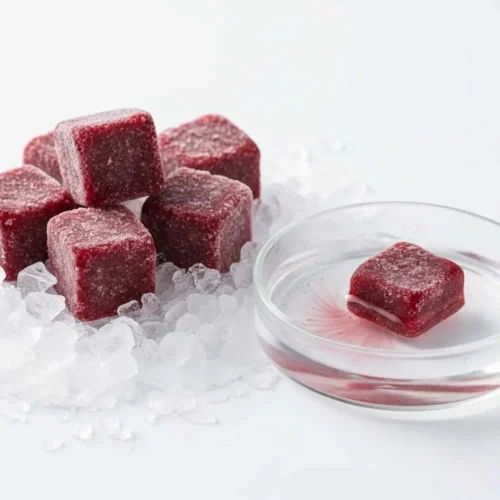
Frozen betta food offers near-live food nutrition without the hassle of maintaining live cultures. Frozen bloodworms are my go-to treat food because every betta I’ve owned goes absolutely crazy for them.
Brine shrimp provide excellent protein and nutrients. The key is proper storage and thawing. Never refreeze thawed food, and only thaw what you’ll use within 24 hours.
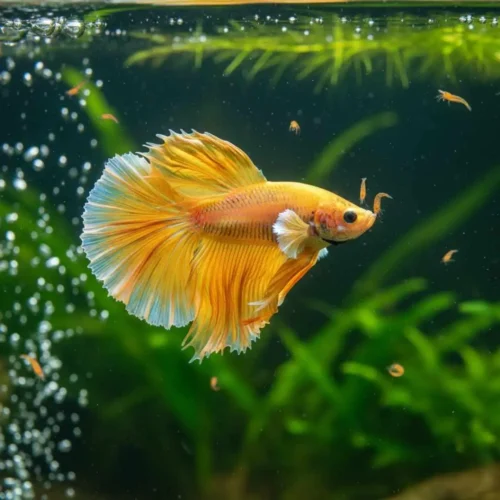
Live food provides the ultimate nutrition and mental stimulation. Watching my bettas hunt live food satisfies their natural predatory instincts. However, live food requires more effort to source and carries potential parasite risks.
Daphnia serves double duty as both nutrition and a natural laxative that helps prevent constipation. I feed live daphnia once weekly as a digestive system cleanse.
After testing over 20 different brands with multiple bettas, these products consistently deliver the best results. I’ve evaluated each based on ingredient quality, protein content, expansion rate, pellet size, and most importantly – how my bettas respond to them.
1. Hikari Betta Bio-Gold (Best Overall)
2. New Life Spectrum Betta Formula (Best for No Bloating)
3. Omega One Betta Pellets (Best Ingredients)
4. Northfin Betta Bits (Best for Small Bettas)
5. Fluval Bug Bites (Most Natural)
What to Look For in Quality Pellets:
Hikari Freeze-Dried Bloodworms
Omega One Freeze-Dried Bloodworms
Hikari Freeze-Dried Daphnia
Hikari Frozen Bloodworms (Gold Standard)
Omega One Frozen Brine Shrimp
San Francisco Bay Frozen Mysis Shrimp
Frozen Food Handling:
Live Brine Shrimp – Hatch your own for nutritious, parasite-free food. Baby brine shrimp work well for adult bettas.
Live Daphnia – Available at many fish stores, excellent for digestion.
Wingless Fruit Flies – Provide entertainment as bettas hunt them from the surface.
Live Bloodworms – Betta favorites, but purchase only from reputable sources to minimize parasite risks.
Understanding water quality, growth patterns, and lifespan helps you make better care decisions
and avoid common mistakes when keeping betta fish.
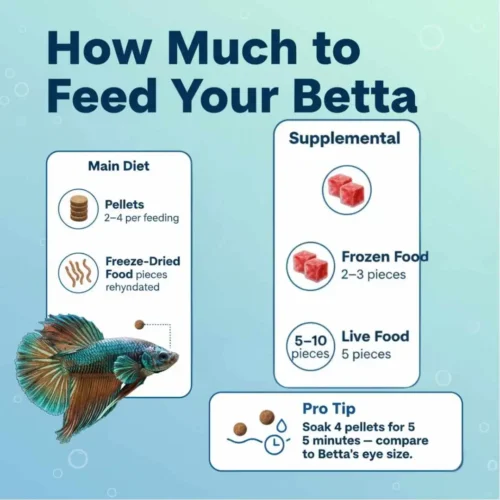
The most common question from new betta owners is portion size, and for good reason – overfeeding causes more health problems than almost anything else. Here’s the simple rule I’ve used successfully for years: your betta’s stomach is approximately the size of their eye.
For Adult Bettas:
This seems small, but remember that pellets expand when wet. Once they’re fully hydrated, those 3-4 tiny pellets become a substantial meal.
Pro Tip: Test your pellets by soaking 4 of them in tank water for 5 minutes. Compare the expanded size to your betta’s eye. If they’re significantly larger, reduce the number of pellets you’re feeding.
Active bettas need more food than lazy bettas. Consider these factors when determining feeding amounts:
| Activity Level | Description | Feeding Amount |
|---|---|---|
| Very Active | Constantly swimming, flaring, exploring | 4-6 pellets, 2x daily |
| Moderately Active | Regular swimming, some resting | 3-4 pellets, 2x daily |
| Less Active | Frequent resting, older bettas | 2-3 pellets, 1x daily |
Watch for bloating, constipation, or weight loss as signs to adjust portions.
Feeding frequency is just as critical as portion size. I feed my adult bettas twice daily – once in the morning around 8-9 AM and once in the evening around 6-7 PM. This schedule mimics how wild bettas eat small meals throughout the day rather than one large feeding.
Ideal Daily Feeding Times:
Baby bettas have different requirements and need 3-5 smaller meals daily to support their rapid growth.
| Age | Feedings Per Day | Food Type |
|---|---|---|
| 0-2 weeks | 5-6 times | Infusoria, liquid fry food |
| 2-4 weeks | 4-5 times | Baby brine shrimp, First Bites |
| 4-8 weeks | 3-4 times | Crushed pellets, micro pellets |
| 8-12 weeks | 2-3 times | Small pellets, freeze-dried food |
| 12+ weeks | 2 times | Adult-sized food, adult schedule |
As your betta transitions through these growth stages, their nutritional needs change significantly. Understanding how betta fish grow helps you adjust portions and feeding frequency appropriately.
A structured weekly schedule takes the guesswork out of feeding. I’ve used this 7-day rotation for years with consistently healthy bettas:
| Day | Morning Feeding | Evening Feeding |
|---|---|---|
| Monday | 3-4 pellets | 3-4 pellets |
| Tuesday | 2-3 freeze-dried bloodworms (soaked) | 3-4 pellets |
| Wednesday | 3-4 pellets | 3-4 pellets |
| Thursday | 3-4 pellets | 2-3 frozen bloodworms |
| Friday | 3-4 pellets | Live or frozen brine shrimp |
| Saturday | 3-4 pellets | 3-4 pellets |
| Sunday | FASTING DAY – No food | FASTING DAY – No food |
Fasting once weekly provides important digestive benefits:
Don’t feel guilty about fasting – wild bettas often go days between meals. Your betta won’t starve and will be healthier for it.
No single food provides everything your betta needs. Different foods offer different nutritional benefits, and rotating between them prevents nutritional deficiencies while keeping your betta mentally stimulated.
| Food Type | Primary Benefits |
|---|---|
| Pellets | Complete baseline nutrition, vitamins, minerals |
| Bloodworms | High protein, iron, encourages natural hunting |
| Brine Shrimp | Protein, fatty acids, easy to digest |
| Daphnia | Protein, natural laxative, prevents constipation |
| Mysis Shrimp | Protein, fiber from exoskeleton, aids digestion |
My Rotation Strategy:
This ratio provides consistent baseline nutrition while offering mental stimulation through varied meals.
Raising betta fry requires completely different nutrition than feeding adults. Baby bettas need ultra-small food particles (50-200 microns), higher protein content (55-60%), and frequent feedings (3-5 times daily). Their tiny mouths can’t handle adult pellets, and their rapid growth rate demands constant nutrition.
Hikari First Bites
Ocean Nutrition Instant Baby Brine Shrimp
Live Baby Brine Shrimp
Golden Pearls Fry Food
Every betta owner eventually faces this stressful situation. Understanding the causes helps you solve the problem quickly without panicking unnecessarily.
Good news: Bettas can safely go 2-3 days without food, so you have time to troubleshoot.
Common Causes:
Solutions to Try:
Garlic Guard Appetite Stimulant:
Seek veterinary help if your betta:
Remember: Bettas can survive 14 days without food (though this isn’t recommended). A couple days of fasting won’t harm your fish and may resolve minor digestive issues.
Overfeeding is the single most common feeding mistake, leading to serious health problems. I learned this the hard way when one of my bettas developed severe swim bladder disorder from overfeeding.
Signs of Overfeeding:
| Symptom | Description |
|---|---|
| Bloated belly | Distended, swollen abdomen |
| Stringy feces | Long, clear or white poop |
| Swim bladder issues | Floating sideways or sinking |
| Lethargy | Reduced activity, sitting at bottom |
| Cloudy water | Excess waste breaking down |
| High ammonia | Toxic buildup from waste |
| Uneaten food | Pellets accumulating at bottom |
Treating Constipation:
Signs include bloated belly, not pooping for 2+ days, or difficulty swimming normally.
Treatment Steps:
Recovery Protocol:
Clean up excess food from your tank using a turkey baster to prevent water quality issues during recovery.
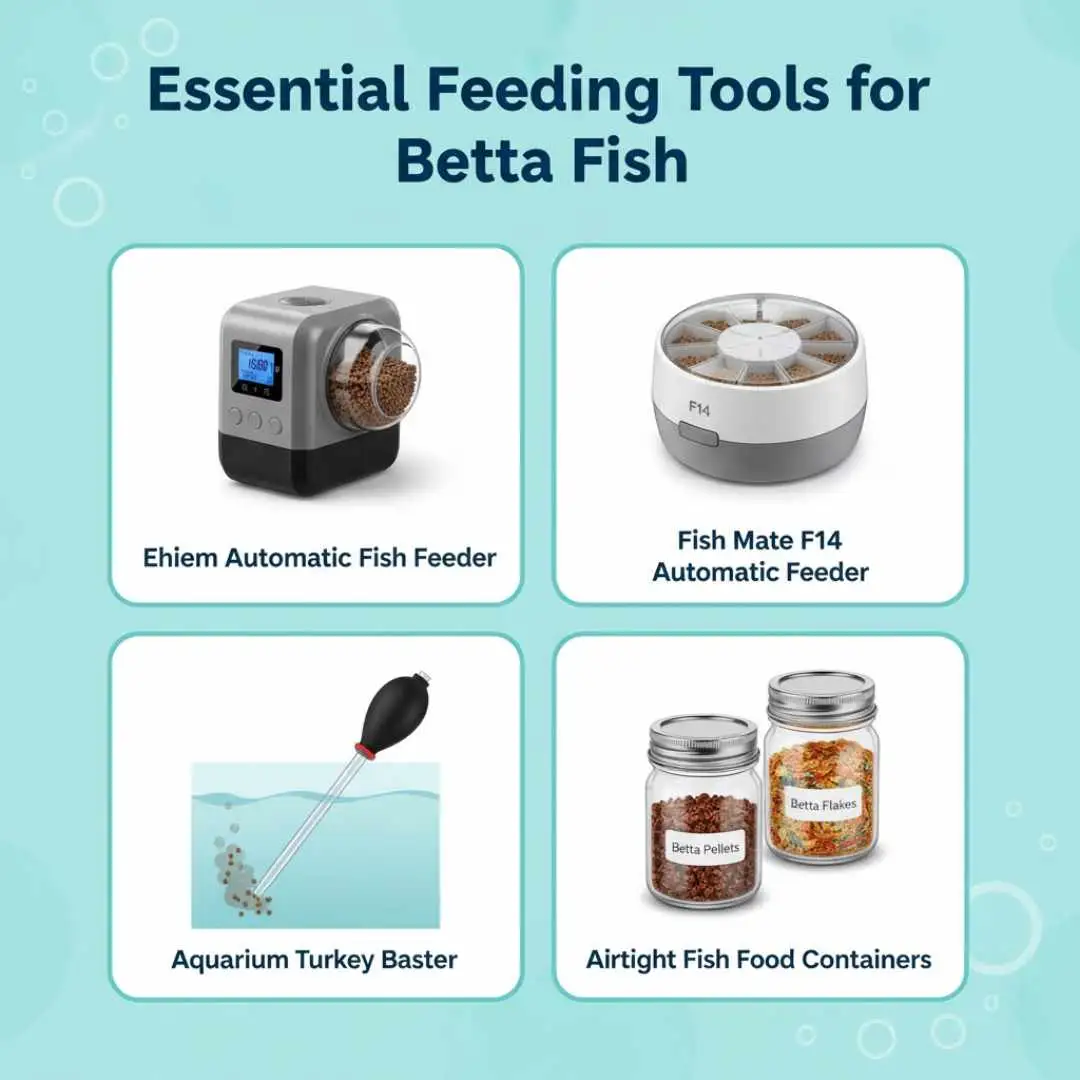
Having the right tools makes feeding easier and prevents common problems. These items have made my feeding routine more efficient and helped me maintain better water quality.
Eheim Automatic Fish Feeder
Fish Mate F14 Automatic Feeder
Aquarium Turkey Baster
Airtight Fish Food Containers
Understanding betta fish food and feeding transforms betta keeping from stressful to enjoyable. The best approach combines high-quality pellets with varied treats like frozen bloodworms, freeze-dried foods, and occasional live food.
The right diet prevents health problems, enhances colors, and extends your betta’s lifespan. Proper nutrition is one of the key factors that determines how long betta fish live, with well-fed bettas often exceeding the average 3-5 year lifespan. After ten years of experimenting with every food type available, I’ve learned that consistency matters more than perfection. Stick to a regular feeding schedule, use quality foods, and watch your betta thrive.
What’s your betta’s favorite food? Drop a comment below and share your feeding routine!