
Last Updated: February 24, 2026
A divided betta tank lets you house multiple bettas in one aquarium using physical dividers. I’ll never forget setting up my first divided betta tank – I thought I was being smart with two male bettas in a 10 gallon tank. Within three days, both fish were stressed and refusing to eat. This complete divided betta tank guide shares everything I learned about proper setup, DIY dividers, and when this method works (or doesn’t).
If you’re considering a divided betta tank to house multiple bettas, you need to know exactly what you’re getting into. A divided betta tank can work beautifully, but only with the right setup, proper visibility control, and realistic expectations. Alternatively, if you prefer keeping a single betta with compatible tank mates like peaceful fish or snails, that’s often a less stressful option for both you and your bettas.
Let’s dive into everything you need to know about betta tank dividers, including honest pros and cons, DIY instructions, and when you absolutely should NOT divide a tank.
| Question | Answer |
| What is a divided betta tank? | An aquarium split into separate sections with dividers to house multiple bettas |
| Can it work? | Yes, but requires proper setup and visibility control |
| Minimum tank size? | 10 gallons (5 gallons per betta minimum) |
| Best tank shape? | Long and shallow tanks (20 gallon long is ideal) |
| Biggest challenge? | Preventing stress from visual contact and flaring |
| Main benefit? | Cost-effective (one heater, one filter, less space) |
| Main risk? | Disease spreads to all fish, divider failure, chronic stress |
A divided betta tank is an aquarium separated into multiple sections using physical barriers called betta tank dividers. This setup allows you to keep multiple male bettas, or a combination of males and females, in a single tank without them fighting.
The key principle is simple: physical separation prevents fighting, but you must also control visibility to prevent stress.
The betta fish tank divider creates separate territories within one aquarium. Each section gets its own space while sharing the same water system, heater, and sometimes filtration. Water can flow between sections through small holes or mesh, maintaining consistent temperature and water parameters throughout the tank.
However, here’s the critical part most people miss: bettas can still see, smell, and sense each other even with a divider in place. This is why simply installing a separator isn’t enough – you need to manage visibility and provide hiding spots.
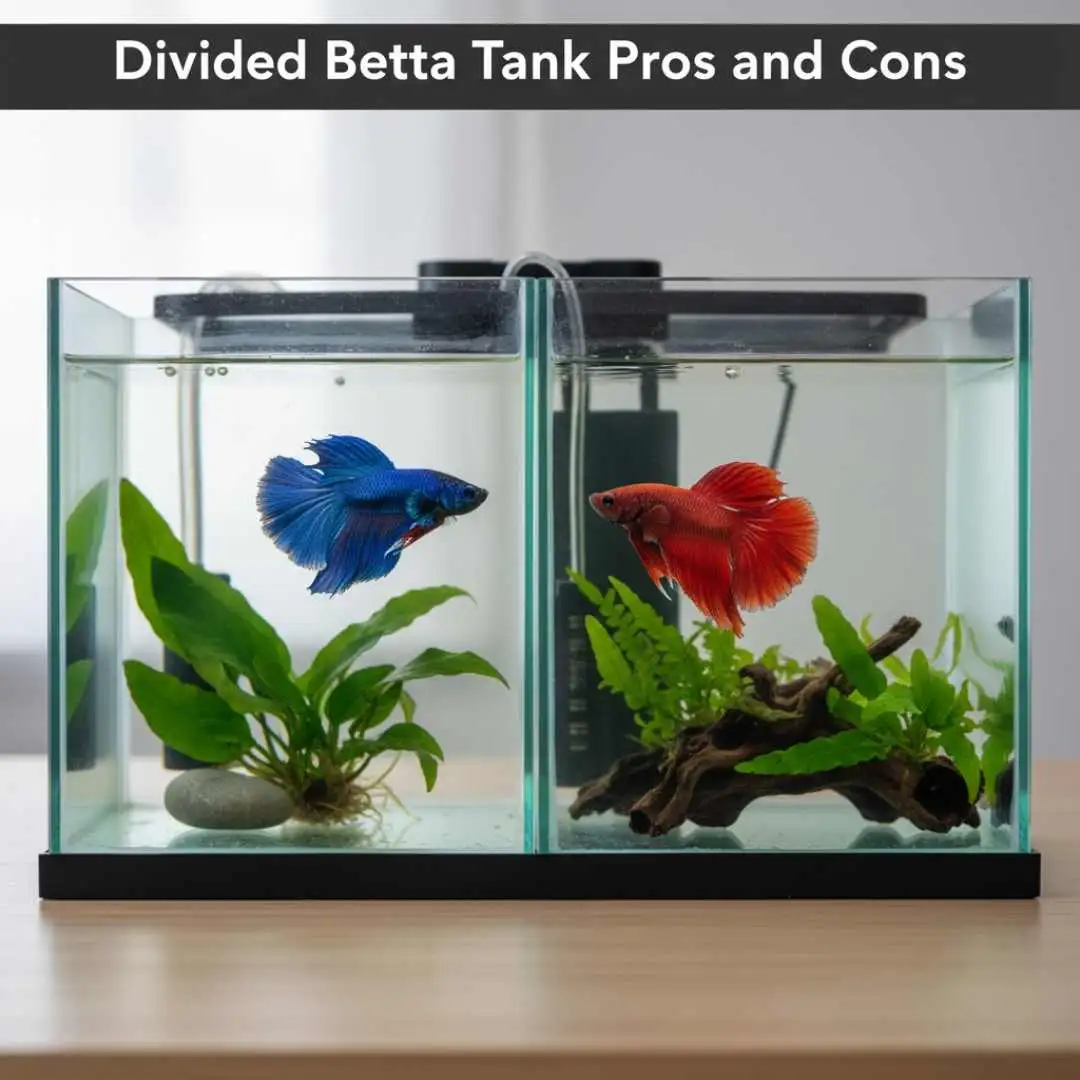
Let’s be honest about what works and what doesn’t with a split betta tank setup.
Cost-effective setup: You only need one heater for most divided tanks (10-15 gallons), and potentially one filter if positioned correctly. This saves money compared to buying separate equipment for each betta.
Space-saving solution: A divided 20 gallon betta tank takes up far less room than four separate 5 gallon tanks. Perfect for apartment dwellers or those with limited space.
Easier maintenance: Water changes, parameter testing, and dosing treatments happen once instead of multiple times. This is the biggest time-saver for busy betta keepers.
More bettas, less footprint: You can keep 2-4 bettas in the same floor space as one regular tank would occupy.
Disease spreads rapidly: This is the biggest risk. If one betta gets sick, all fish share the same water. Within days, your entire divided tank can be infected. I’ve seen healthy bettas contract fin rot from a sick neighbor in under 48 hours.
Chronic stress potential: Male bettas in divided tanks may experience constant low-level stress from sensing other males nearby. This stress can lead to:
Divider failure is catastrophic: If a betta jumps over or finds a gap in the divider, you’ll have a fight on your hands. This can result in severe injury or death in minutes.
Water quality challenges: Multiple bettas produce more waste and release hormones into shared water. Many keepers report needing 2-3 times more frequent water changes in divided setups compared to single betta tanks.
Not suitable for all bettas: Some bettas are too aggressive or easily stressed for divided tank life, regardless of how well you set it up.

The short answer: Yes, but your success depends heavily on which bettas you’re dividing.
This is the most common setup, but also the most challenging:
My experience: I’ve had male bettas coexist peacefully in divided setups, but I’ve also had to separate bettas after just days because the stress was too much. It truly depends on individual personality.
I don’t recommend this setup. Here’s why:
The male releases breeding hormones into the water. The female can detect these hormones even through a divider, which may cause eggbound conditions or constant stress. Additionally, both fish will display breeding behaviors toward each other, creating frustration when they can’t actually breed.
Female bettas can be divided, though it’s less common since females can sometimes coexist in a sorority. Dividing females makes sense if:
Absolute minimum: Each betta needs 5 gallons of space. This means a divided 10 gallon betta tank can house 2 bettas, and a divided 20 gallon betta tank can house 2-4 bettas depending on how you divide it.
10 gallon standard (20″ x 10″ x 12″):
20 gallon long (30″ x 12″ x 12″):
15 gallon long:
Dividing a 10 gallon tank for bettas (or larger) works best when the tank is long and shallow because:
Never divide tall tanks like hexagons or column tanks. Bettas struggle in deep water, especially males with heavy fins.
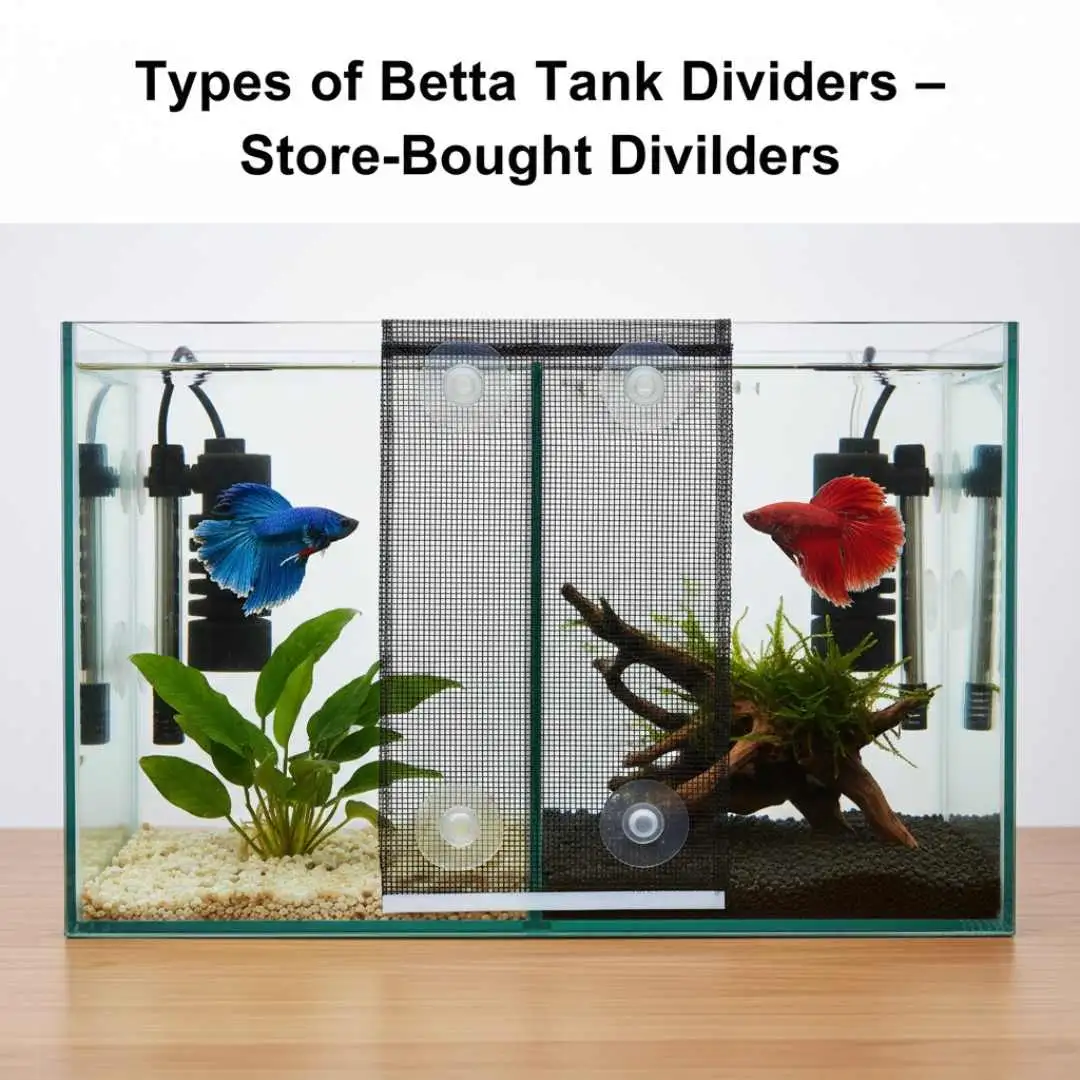
Commercial plastic dividers are available on Amazon and pet stores for $10-20. These pre-made betta tank separators typically feature:
Pros: Quick, easy to install, readily available
Cons: Often don’t fit perfectly, may allow too much visibility, can be flimsy
Most experienced keepers prefer homemade betta tank divider solutions because they can customize fit, opacity, and stability.
Popular DIY materials:
The best material for betta divider projects is plastic canvas mesh (also called needlepoint canvas) because it’s:
Making a plastic mesh betta divider is simple and costs under $15 for materials.
Step 1: Measure Your Tank
Measure the inside height and width of your tank where the divider will sit. Add 1/4 inch to height and width for a snug fit. The divider should wedge firmly without gaps.
Step 2: Cut the Mesh
Cut the betta tank divider craft mesh slightly larger than your measurements. You can always trim more, but you can’t add material back. Cut carefully to avoid leaving sharp, jagged edges that could damage fins.
Step 3: Attach Binder Splines
Cut binder report splines to match the height of your tank on both left and right sides. These splines slide into the top rim of the tank and hold the mesh divider in place against the glass walls.
Step 4: Install in Tank
Insert the divider into your tank, using the splines to wedge it firmly against both side walls. The mesh should bow slightly from the pressure, creating a tight seal.
Step 5: Secure the Bottom
Use substrate (gravel or sand) to anchor the bottom of the divider. Pile substrate slightly higher along the base to prevent bettas from squeezing underneath.
Step 6: Test for Gaps
Fill the tank and check carefully for any gaps or openings. Pay special attention to corners and the bottom edge. Even a small gap can allow a determined betta to squeeze through.
The double divider betta tank method uses two dividers placed 1-2 inches apart, creating a center compartment between betta territories.
Why this method is superior:
How to build it:
This is the setup I now use exclusively. The extra safety and stress reduction are worth the slight loss of swimming space.
This is the most critical factor for success. Bettas need to NOT see each other constantly, or stress will become chronic.
Use dark, opaque dividers: Black or dark green plastic mesh works better than clear. Consider doubling up mesh layers for extra opacity.
Plant heavily along the divider: Place tall, bushy plants on both sides of the barrier:
Add floating plants: Surface coverage like frogbit or water lettuce blocks sight lines across the top.
Position decorations strategically: Place caves, driftwood, and ornaments near the divider to create visual barriers and hiding spots.
Reduce tank lighting: Dimmer lighting makes it harder for bettas to see through dividers.
My rule of thumb: If you can easily see from one section to another when standing in front of the tank, your bettas can too. Add more plants until visibility is severely limited.
One central filter:
Separate sponge filters (RECOMMENDED):
My setup: I use mini sponge filters in each section connected to a single air pump. This gives each betta gentle, consistent filtration without strong currents.
10 gallon divided tank: One 50-watt heater placed centrally is usually sufficient
20 gallon divided tank: Two 50-watt heaters work better than one 100-watt (more even heat distribution)
Placement tip: If using one heater, place it near the center or in a center compartment (if using double divider method) for even temperature distribution.
Set heater to 78°F and monitor both sections with separate thermometers to ensure consistent temperature.
Even with perfect setup, some bettas simply cannot handle divided tank life. Watch for these warning signs:
Signs of stress from betta tank divider:
Stress prevention strategies:
When to separate immediately:
If a betta shows signs of severe stress (refusing food for 3+ days, extreme fin biting, constant aggression), separate them immediately. Some bettas are happier living alone, and that’s okay.
Here’s an uncomfortable truth: divided betta tank water quality is harder to maintain than many keepers expect.
More frequent water changes needed: Most divided tank owners report changing water 2-3 times per week instead of once weekly. The bioload from multiple bettas adds up quickly.
Hormone accumulation: Male bettas release breeding hormones constantly. In divided setups, these hormones accumulate and can stress all fish.
Algae blooms: Higher bioload often leads to algae problems, especially hair algae. Many keepers report algae in divided 20 gallon tanks that they never had in individual tanks.
Film on water surface: Sections without direct filter flow often develop protein film on the surface.
Weekly:
Monthly:
The reality: Divided tanks require MORE maintenance, not less. Yes, you’re only maintaining one tank, but that one tank needs more frequent attention.
Betta jumping over divider is one of the most common – and dangerous – problems.
Inspect your divider daily for:
Have emergency supplies ready:
If you find a betta on the wrong side:
Silicone betta tank divider (permanent):
Non-permanent dividers:
I use silicone on my permanent divided tanks, but start new setups with removable dividers for the first month. If the bettas do well, then I make it permanent.
The harsh reality: when one betta gets sick in a divided tank, you’re treating the entire tank.
Diseases spread through shared water via:
Since all sections share water, pathogens circulate throughout the system. Even with dividers, disease transmission happens within 24-48 hours.
Quarantine new bettas: Always quarantine new fish for 2-3 weeks BEFORE adding to a divided tank. This single step prevents most disease outbreaks.
Treat the entire tank: Don’t try to treat just one section – it doesn’t work. Dose medication based on total tank volume.
Remove activated carbon: Many medications are absorbed by carbon filters. Remove carbon during treatment.
Have a hospital tank: Keep a separate 5-10 gallon tank for isolating sick fish if needed.
After years of trial and error with divided setups, here are my top recommendations:
Setup phase:
Monitoring phase (first 2 weeks):
Long-term maintenance:
The honest truth: About 30% of divided tanks don’t work out long-term, even with perfect setup. Some bettas are just too aggressive or stress-prone for this lifestyle. Be prepared to separate if needed.
Divided tanks aren’t for everyone. Skip this setup if:
Your bettas are extremely aggressive: Plakats and some show-quality males are too territorial
You’re a first-time betta keeper: Master single betta care first before attempting divided setups
Your tank is under 10 gallons: Never divide tanks smaller than 10 gallons – there’s not enough space
You have a tall/column tank: These tank shapes are unsuitable for bettas period, divided or not
You can’t commit to frequent water changes: Divided tanks need 2-3x weekly maintenance
Better alternatives:
Sometimes the best answer is giving each betta their own space. There’s no shame in choosing individual tanks over divided setups.
| Feature | Divided Tank | Individual Tanks |
| Initial Cost | Lower (1 heater, 1 filter) | Higher (equipment for each) |
| Space Required | Minimal (1 tank footprint) | More (multiple tanks) |
| Maintenance Time | Higher (2-3x weekly changes) | Lower (1x weekly per tank) |
| Disease Risk | High (spreads to all fish) | Low (isolated) |
| Stress Level | Moderate to High | Low |
| Success Rate | ~70% (personality dependent) | ~95% |
| Best For | Experienced keepers, calm bettas | Beginners, all bettas |
| Water Quality | Harder to maintain | Easier to maintain |
No, a divided betta tank is not cruel when done correctly. The key requirements are: minimum 5 gallons per fish, proper visibility control with opaque dividers and plants, separate hiding spots, and constant monitoring for stress. However, it becomes cruel if bettas show chronic stress (constant flaring, fin biting, refusal to eat) and aren’t separated. Some bettas simply cannot handle divided tank life regardless of setup quality.
Most bettas adjust to a divided tank within 1-2 weeks. During the first week, expect frequent flaring and territorial displays as they establish boundaries. By week two, flaring should decrease to 1-2 times daily. However, approximately 30% of bettas never fully adjust and show ongoing stress symptoms. If stress behaviors continue beyond 2 weeks, the setup isn’t working for those particular fish.
No, bettas do not get lonely. They are solitary fish by nature and do not require companionship from other bettas. In fact, the proximity of other bettas in divided tanks often causes stress rather than comfort. Male bettas view other males as threats, not friends. They are perfectly content living alone and may actually be happier without sensing nearby rivals.
Yes, bettas can often see each other through dividers, especially clear or mesh dividers. This visibility is the primary cause of stress in divided tanks. Even with opaque dividers, bettas can still sense each other through hormones and water vibrations. This is why heavy planting along dividers, dark-colored mesh, and double-layer dividers are essential to minimize visual contact and reduce stress.
If a betta jumps the divider and enters another betta’s territory, fighting will occur within seconds. This can result in severe injuries including torn fins, damaged scales, and even death. Immediate separation is critical. Always keep water level at least 2 inches below the divider top, use a tight-fitting lid, and have emergency equipment ready (net, cup, quarantine tank) in case of divider failure.
A divided betta tank can be a practical, space-saving solution for housing multiple bettas – when done correctly. The key to success lies in proper tank size (minimum 10 gallons, 5 per betta), effective visibility control through plants and opaque dividers, and realistic expectations about maintenance.
The honest truth? Divided tanks require more maintenance, not less. Water changes become more frequent, disease risk increases, and constant monitoring is essential. About one-third of divided tank setups ultimately fail due to stress, aggression, or water quality issues.
My recommendation: If you’re experienced with bettas and can commit to 2-3 weekly water changes, a divided 20 gallon long tank with double dividers and heavy planting can work beautifully. But if you’re new to bettas or can’t handle intensive maintenance, stick with individual tanks for each fish.
Remember, the goal isn’t just keeping bettas alive – it’s giving them a stress-free, thriving life. Sometimes that means accepting that your particular fish aren’t compatible with divided living, and that’s perfectly okay.
Ready to create the perfect environment for your bettas? These essential guides will help you optimize your divided tank:
Betta Fish Plants – Discover the best live plants to reduce visibility between sections, provide natural hiding spots, and improve water quality in your divided setup.
Mystery Snails with Betta – Learn how adding mystery snails to each section can help with algae control and provide gentle tank mates that won’t stress your bettas.
Marimo Moss Ball – These low-maintenance aquatic plants naturally filter water and work perfectly in divided tanks where water quality is critical.